Arapaima Fishing in the Amazon (Bolivia) | Ultimate Guide
Are you an angler craving a bucket-list fishing adventure? Look no further than Arapaima Lodge - Bolivia
Key Takeaways
-
The Amazon Basin spanning Brazil, Peru, Colombia, and Guyana is the core habitat for wild arapaima, with peak fishing generally during the dry season from July through December—specifically September to November at most lodges.
-
Arapaima regularly surface to gulp air every 10-20 minutes, reach 6-8 feet and 200-300 pounds in the wild, and demand heavy tackle or 10-12 weight fly gear plus disciplined catch-and-release handling.
-
Hosted lodges in protected reserves like Mamirauá in Brazil or Pacaya-Samiria in Peru combine trophy fishing with strict conservation rules and scientific tagging programs.
-
Anglers should prepare with moisture-wicking, UPF 50+ sun-protective apparel and lightweight layers—Blackbone performance hoodies, sun shirts, and hats are built for exactly these conditions.
-
Expect hot, humid days around 30°C (86°F), wildlife encounters with caiman and pink dolphins, remote travel through hubs like Manaus or Iquitos, and professional local guides handling boats and big fish.
Introduction: Why Arapaima Fishing in the Amazon Belongs on Your Bucket List
Picture this: a glassy Amazon lagoon at dawn, mist curling off water the color of black coffee, when suddenly an enormous bronze-scaled head breaks the surface twenty yards from your boat. The arapaima inhales a gulp of air, rolls, and disappears—leaving you three seconds to place a fly or lure in its predicted path before everything erupts in one of those explosive surface strikes that rewrites your definition of freshwater fishing.
Arapaima gigas—known as pirarucu in Brazil and paiche in Peru—stands among the largest freshwater fish on the planet, with specimens routinely exceeding 200 pounds and stretching past six feet. These prehistoric predators have prowled the flooded forests of South America for over 20 million years, and today they represent the ultimate target for anglers seeking a true jungle adventure. Most arapaima fishing trips unfold in remote corners of the amazon basin accessible only by riverboat or bush plane, where modern conservation efforts have transformed what was once a depleted fishery into a sustainable catch-and-release destination. Every fish is tagged, measured, and released—meaning you get the fight of your life while helping protect the species for future generations.
At Blackbone, we design performance apparel for exactly these conditions: UPF 50+ fishing hoodies, breathable long-sleeve shirts, and quick-dry gear built to handle the humidity, UV exposure, and constant dampness of the amazon jungle. When your clothing works as hard as you do, you can focus on what matters—putting the right fly in front of an incredible fish.
Meet the Arapaima: The Amazon’s Air-Breathing Giant
Understanding arapaima biology isn’t just academic—it directly shapes how you fish for them. These giants breathe atmospheric air, which forces them to the surface regularly and gives anglers the visual opportunities that make this fishery unique. But their size, power, and wariness demand respect and preparation.

Physical Characteristics
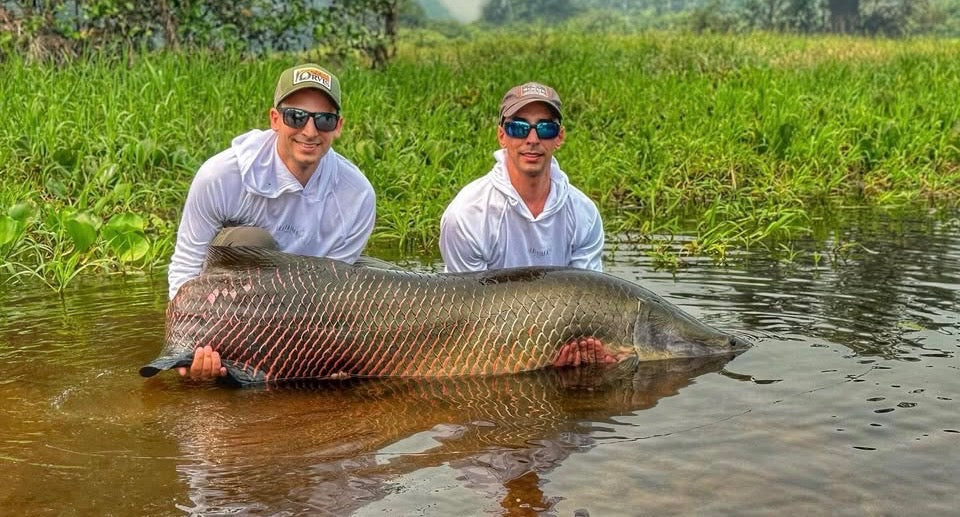
The arapaima’s body is built for raw power: a torpedo-shaped profile covered in armor-like ganoid scales, dark olive-green along the back, with striking red and orange edges toward the tail that intensify during spawning season. Wild adults typically measure 6-8 feet in length and weigh 200-300 pounds, though historical records document giants exceeding 10 feet and several hundred pounds. The sheer size of a large arapaima is difficult to comprehend until you’re fighting one.
Air-Breathing Behavior
What sets arapaima apart from other fish is their labyrinth organ—a highly vascularized swim bladder that functions as a primitive lung. These fish must gulp air every 10-20 minutes, rising to the surface in a distinctive roll that reveals their location. For anglers, this behavior is both opportunity and challenge: you can spot fish and plan your approach, but arapaima spook easily in the still, clear lagoons they inhabit. Stealth becomes paramount.
Habitat and Diet
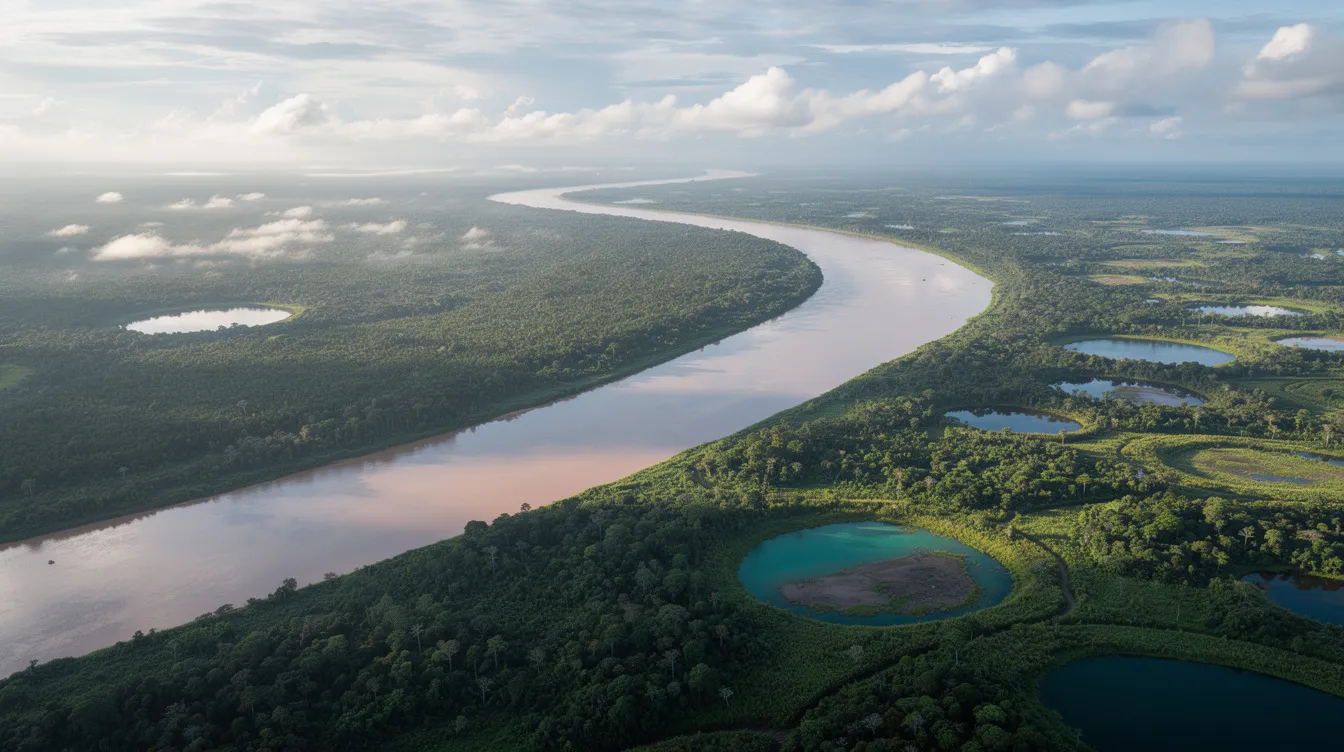
Arapaima thrive in slow moving rivers, backwater lagoons, oxbow lakes, and flooded forests connected to major tributaries like the Rio Negro, Solimões, and Essequibo. These environments often have dissolved oxygen levels so low that most fish cannot survive—but arapaima simply breathe from above.
As a top predator, arapaima eat a varied diet including:
-
Peacock bass and red bellied piranha
-
Crustaceans and insects
-
Fruits and seeds during flood season
-
Small terrestrial animals like birds and mammals near shorelines
This predatory nature influences effective lures and flies—patterns that mimic baitfish or push water aggressively tend to trigger strikes.
Best Places in the Amazon to Fish for Arapaima
Truly wild arapaima fishing is concentrated in managed reserves and indigenous territories where catch-and-release rules, limited angler quotas, and scientific monitoring have allowed populations to recover. Choosing the right destination shapes your entire experience.
Brazil: Mamirauá Reserve and Beyond
Brazil’s Mamirauá Sustainable Development Reserve near Tefé represents the gold standard for fly fishing arapaima. Accessible by floatplane or boat from Manaus, this UNESCO-recognized reserve offers glassy flooded forest lagoons where community co-management has restored healthy populations. Most operations here are fly-only, with strict conservation protocols. Beyond Mamirauá, private lakes and community-managed waters across the central Amazon offer additional opportunities, though quality varies significantly.
Peru: Pacaya-Samiria National Reserve
Peru’s Pacaya-Samiria National Reserve—nicknamed the “Jungle of Mirrors” for its mirror-calm backwaters—sprawls near Iquitos and provides exceptional arapaima habitat. The reserve’s eco-tourism framework emphasizes sustainability, and the calm oxbow lakes make for ideal sight-fishing conditions. Guides pole skiffs through flooded timber while anglers watch for surfacing fish in waters that reflect the jungle canopy like glass.
Colombia: Leticia and Yahuarcaca Lakes
The Colombian Amazon frontier around Leticia and the Yahuarcaca Lakes offers a less-pressured, more rustic experience. Logistics here require flexibility and comfort with basic accommodations, but anglers willing to rough it find fewer boats on the water and wild arapaima that haven’t been heavily targeted. This region also allows you to combine arapaima with payara fishing for a diverse trip.
Guyana: Essequibo and Rupununi
Guyana’s Essequibo River system and Rupununi wetlands represent one of the most successful arapaima recovery stories, driven by indigenous-led conservation initiatives. Local communities co-manage the fishery, creating both sustainable fishing pressure and direct economic benefits for villages. Anglers here can target arapaima alongside peacock bass and other jungle species, making for a varied and immersive experience.
Outside South America
Stocked lakes in Thailand and other Asian destinations offer year-round access to arapaima, often with higher catch rates and easier logistics. However, these controlled environments lack the broader amazon rainforest ecosystem—the wildlife encounters, remote travel, and sense of expedition that define a true Amazon trip. For many anglers, the difference matters.
When to Go: Amazon Seasons, Water Levels, and Weather
Timing your fishing trip around water levels matters more than calendar dates. The Amazon’s annual flood cycle—where water levels can fluctuate 10-15 meters—concentrates fish into isolated lagoons during low-water periods, dramatically improving your odds.
Brazil Timing
Most arapaima lodges in the central Amazon, including those in the Mamirauá Reserve, operate peak seasons between mid-September and late November. As waters drop, fish become trapped in shrinking lakes, concentrating populations and improving visibility. This window represents prime time for guided fishing in Brazil.
Peru Timing
Peru’s Pacaya-Samiria fisheries run strong from June through November, with late dry-season months offering the best combination of fish concentration and water clarity. Expect the most predictable conditions in September and October.
Colombia and Guyana Timing
Colombia’s Amazon frontier typically fishes best from July through October, while Guyana’s season runs roughly September through February. Both destinations align their operations with falling water levels and drier weather patterns.
Weather Expectations
Regardless of destination, prepare for challenging conditions:
|
Condition |
Typical Range |
|---|---|
|
Daytime temperature |
28-34°C (82-93°F) |
|
Humidity |
80-100% |
|
Afternoon showers |
Frequent, often heavy |
|
UV exposure |
Extreme |
These conditions make breathable, quick-drying clothing, sun hoods, and wide-brimmed hats essential—not optional. The combination of humidity, UV, and constant dampness defeats cotton quickly.
How to Fish for Arapaima: Tactics That Work
Fishing for arapaima demands patience, precision, and strong hook-sets. Whether you’re throwing lures or flies, the fundamentals remain consistent: stealth, positioning, and the discipline to drive a hook into one of the hardest mouths in freshwater.
Approach and Positioning
Arapaima in glassy lagoons spook easily. Guides pole skiffs silently into position, reading surfacing patterns to predict where fish will roll next. Your job is to place your presentation ahead of the fish—not where it just surfaced, but where it’s going. Long casts help, but accuracy matters more than distance.
Spinning and Baitcasting Tactics
For conventional tackle, effective presentations include:
-
Large swimbaits (10-12 inches) mimicking baitfish
-
Cut bait where legal, often piranha or other local species
-
Slow retrieve patterns that keep offerings in the strike zone
Cast toward structure, current seams, or recent surfacing activity. Arapaima often strike on the pause or during a slow, steady retrieve rather than aggressive jerking motions.
Fly Fishing Approach
Fly fishing for arapaima requires heavy artillery: 9-foot 10-12 weight rods with large-arbor saltwater reels and robust drag systems. Line selection depends on depth and conditions:
-
Sink-tip lines for working deeper water near structure
-
Floating lines for sight-casting to rolling fish in shallow lagoons
Flies should push water and present a substantial profile—think 6-8 inch baitfish patterns tied on heavy hooks. The goal is visibility and presence, not subtlety.
Setting the Hook
Here’s where many anglers fail. When an arapaima takes, you’ll feel a heavy “suck” as the fish inhales your offering. The instinct is to set immediately—resist it. Instead:
-
Keep stripping or reeling to maintain contact
-
Feel the weight of the fish
-
Execute multiple low, lateral strip-strikes to drive the hook home
-
Use side pressure rather than overhead sweeps
The bony mouth requires persistent force to penetrate. A premature lift often pulls the fly or lure free.
Fighting Big Fish
Expect battles lasting 20-40 minutes with specimens over 200 pounds. Arapaima combine powerful runs with jumps and a frustrating tendency to head for submerged timber. Keep maximum side pressure, follow guide instructions, and be patient. Rushing the fight leads to break-offs or exhausted fish that struggle to recover after release.
Essential Gear for Arapaima: Rods, Lines, and Blackbone Apparel
Reliable heavy tackle and appropriate clothing can mean the difference between enjoying the Amazon and merely surviving it. Pack thoughtfully—you’re heading somewhere that doesn’t have a tackle shop around the corner.
Rod and Reel Selection
Spinning/Baitcasting:
-
7-8 foot heavy to extra-heavy rods
-
Line rating: 80-130 lb class
-
High-capacity reels with smooth, powerful drags
Fly Fishing:
-
9-foot 10-12 weight rods
-
Large-arbor saltwater reels (think tarpon or GT grade)
-
Strong, sealed drags that can handle long runs
Line, Leader, and Terminal Tackle
|
Component |
Specification |
|---|---|
|
Main line |
80 lb braided |
|
Leader |
100-150 lb fluorocarbon or mono |
|
Hooks |
Circle hooks, 5/0-10/0 for bait |
|
Lure hardware |
Heavy-duty split rings, strong single hooks |
Circle hooks improve release survival and reduce deep hooking. For flies, tie on heavy-gauge hooks designed for big game species.
Clothing for Jungle Conditions
This is where Blackbone gear earns its place in your duffel. The Amazon’s combination of intense UV, oppressive humidity, and constant dampness from sweat, rain, and boat spray destroys ordinary clothing. What you need:
-
UPF 50+ performance hoodies that block sun while allowing airflow
-
Moisture-wicking long-sleeve shirts that dry quickly between sessions
-
Quick-dry shorts or lightweight pants for comfort all day
Blackbone’s technical fabrics handle exactly these conditions—designed by anglers who understand that wet cotton and sunburned arms ruin trips.
Sun and Bug Protection
Pair your Blackbone hoodie with:
-
Neck gaiters for additional face and neck coverage
-
Wide-brimmed hats or caps with dark undersides
-
Polarized sunglasses (bring backups)
-
DEET-based insect repellent for dawn and dusk
Coverage beats sunscreen in the jungle—less reapplication, better protection.
Packing Checklist Highlights
Plan to bring:
-
3-4 technical tops (rotating daily)
-
Backup polarized glasses
-
Packable rain shell that layers over a hoodie
-
Dry bags for electronics and valuables
-
Headlamp and power bank
-
Compact first-aid kit
Conservation, Local Communities, and Responsible Angling

Arapaima were heavily overfished throughout the 20th century. Near major cities like Manaus and Iquitos, populations crashed to commercial extinction by the 1970s—the result of intensive gillnet harvests that once yielded up to 10 million kilograms annually in Brazil alone. Today’s best fisheries exist because of deliberate conservation efforts.
How Conservation Works at Amazon Lodges
Reputable arapaima operations follow strict protocols:
-
Mandatory catch-and-release for all arapaima
-
Size and catch limits (often releasing fish under 1.5-2 meters)
-
Scientific tagging and measuring of each landed fish
-
Gear restrictions (fly-only or artificial lures only in many areas)
These practices, combined with limited angler quotas, have produced documented population recoveries—some reserves report 5-10% annual increases in managed areas.
Benefits to Local Communities
The financial model matters. When arapaima generate income through guided fishing rather than commercial harvest, local communities gain direct benefits:
-
Guide employment and lodge operations
-
Conservation fee revenue that stays local
-
Economic incentive to protect habitat rather than exploit it
This community co-management approach drives success stories like the Mamirauá Reserve and Guyana’s Rupununi program.
Your Role as an Angler
Responsible behavior starts with following guide instructions, but a few specific practices make a real difference:
-
Minimize air exposure—keep fish in the water whenever possible
-
Support the head and tail if lifting briefly for photos
-
Use barbless or pinched hooks when regulations allow
-
Never keep a fish unless explicitly permitted
At Blackbone, we believe that sustainable, low-impact fishing isn’t just ethical—it’s what ensures these incredible fish remain available for future anglers. Performance gear and adventure travel are about participating responsibly in wild places, not just checking boxes.
Planning Your Amazon Arapaima Trip
Most arapaima fishing trips involve multiple travel legs—international flights, regional connections, and boat transfers to remote lodges. Planning ahead prevents surprises.
Travel Logistics: A Sample Brazil Itinerary
A typical trip to Brazil’s Mamirauá Reserve might look like this:
-
Day 1: Fly into Manaus, overnight at a downtown hotel
-
Day 2: Morning flight to Tefé (approximately 1 hour)
-
Day 2: Boat transfer to lodge (2-4 hours depending on water levels)
-
Days 3-8: Guided fishing in flooded forest lagoons
-
Day 9: Boat and flight back to Manaus, overnight
-
Day 10: International departure
Similar patterns apply to Peru (via Iquitos), Colombia (via Leticia), and Guyana (via Georgetown).
Booking and Group Size
Most lodges host 6-12 anglers per week, with two anglers per boat and guide—standard for intensive guided fishing in remote areas. Peak season weeks (September-November in Brazil) book 9-12 months in advance. Early planning is essential.
Health and Safety Preparation
Before departure, address:
|
Consideration |
Action |
|---|---|
|
Vaccinations |
Consult a travel clinic (yellow fever often required) |
|
Malaria |
Discuss prophylactics with your doctor |
|
Insurance |
Purchase coverage that includes remote evacuation |
|
Medications |
Bring adequate personal prescriptions |
Avoid taking medical advice from fishing articles—speak with a healthcare professional about your specific needs.
What to Pack
Beyond tackle and apparel, consider:
-
Dry bags for electronics and documents
-
Headlamp with extra batteries
-
Power bank (lodges may have limited charging)
-
Sandals plus deck shoes
-
Compact first-aid kit
-
Copies of important documents
Many lodges rent rods and reels, but serious anglers typically bring their own proven setups.
What a Typical Day on the Water Looks Like
A day of arapaima fishing combines intense angling with complete jungle immersion. The rhythm follows the fish—and the heat.
Morning Session
Your day starts before dawn with strong coffee at the lodge dock as mist rises off the water. You slide into a small skiff with your local guide, who poles quietly through narrow channels toward productive lagoons. The air is cool—relatively speaking—and alive with birds calling from the canopy. A Blackbone long-sleeve top cuts the morning chill and keeps mosquitoes off your arms.
As light builds, you start watching for rolling fish. The big one might surface anywhere, and when it does, you have seconds to place a cast. The guide reads the water, positions the boat, and keeps everything silent.

Midday Break
By late morning, the heat becomes oppressive. Most operations return to the lodge for lunch in the dining room, rehydration, and a siesta during peak temperatures. This is when you rinse off gear, swap into a fresh moisture-wicking shirt, and prepare for the afternoon session. The jungle goes quiet in the heat—even the fish seem to rest.
Afternoon and Evening
As shadows lengthen and temperatures drop slightly, you head back out. Arapaima often feed more aggressively in the lower light, and the evening session can produce the most action. Guides may suggest switching flies or lures based on what they’ve observed throughout the day.
Returning at dusk, you pass caiman sliding into the water, spot pink river dolphins surfacing in the main channel, and hear macaws screaming overhead. Dinner follows, then trip logs and perhaps a cold drink while reviewing the day’s encounters.
Throughout all of this, professional guides handle boat positioning, fish spotting, and safe handling of large arapaima. Your job is casting, hook-sets, and soaking in the nature around you.
FAQ
Do I need prior big-game fishing experience to target arapaima in the Amazon?
While previous experience with heavy tackle—tarpon, muskie, giant trevally—certainly helps, most reputable Amazon lodges are equipped to teach motivated beginners who have solid casting fundamentals. Guides work closely with anglers of all skill levels. That said, you should be physically prepared for hot, humid conditions and the physical strain of fighting fish that can exceed 100 pounds. Light conditioning before your trip pays dividends.
Can I keep an arapaima to eat during my trip?
Nearly all wild arapaima operations in Brazil, Peru, Colombia, and Guyana are strictly catch-and-release, often mandated by government or community conservation agreements. Lodges typically serve locally sourced fish species that are part of legal subsistence harvests—you’ll eat well, just not arapaima. Every arapaima you catch will be tagged, measured, and released to support ongoing population recovery.
What’s the difference between fishing for arapaima in the wild Amazon and in stocked lakes like Thailand?
Stocked fisheries offer controlled environments with managed populations, feeding schedules, and easier logistics. You’ll likely see more fish and face simpler travel. However, these operations lack the broader ecosystem experience—the remote jungle setting, wildlife encounters, complex water systems, and community-based conservation that define a true Amazon trip. For many anglers, landing a wild arapaima in its native habitat feels fundamentally different from catching a stocked fish in a pond, possibly because every element of the experience connects to something larger.
How many days should I plan for a serious arapaima trip?
Plan for 6-7 full fishing days on the water, plus at least 2-3 travel days on either end to account for international flights, weather delays, and overnight stops in hub cities like Manaus or Iquitos. A full week on-site dramatically improves your odds of encountering good conditions and getting multiple shots at trophy-size fish. Shorter trips often mean you’re just hitting your stride when it’s time to leave.
What specific Blackbone items are best for an Amazon arapaima adventure?
Start with a UPF 50+ Blackbone performance hoodie as your workhorse layer—it blocks intense UV while breathing in humidity. Pair it with lightweight long-sleeve sun shirts for variety and quick-dry shorts or pants for all-day comfort. Add a breathable fishing hat with a dark underside to reduce glare. Pack multiple tops (3-4 minimum) to rotate daily, because fast-drying, moisture-wicking fabrics are essential when everything—gear, clothing, you—will be constantly damp from sweat, rain, and boat spray. The jungle rewards preparation.